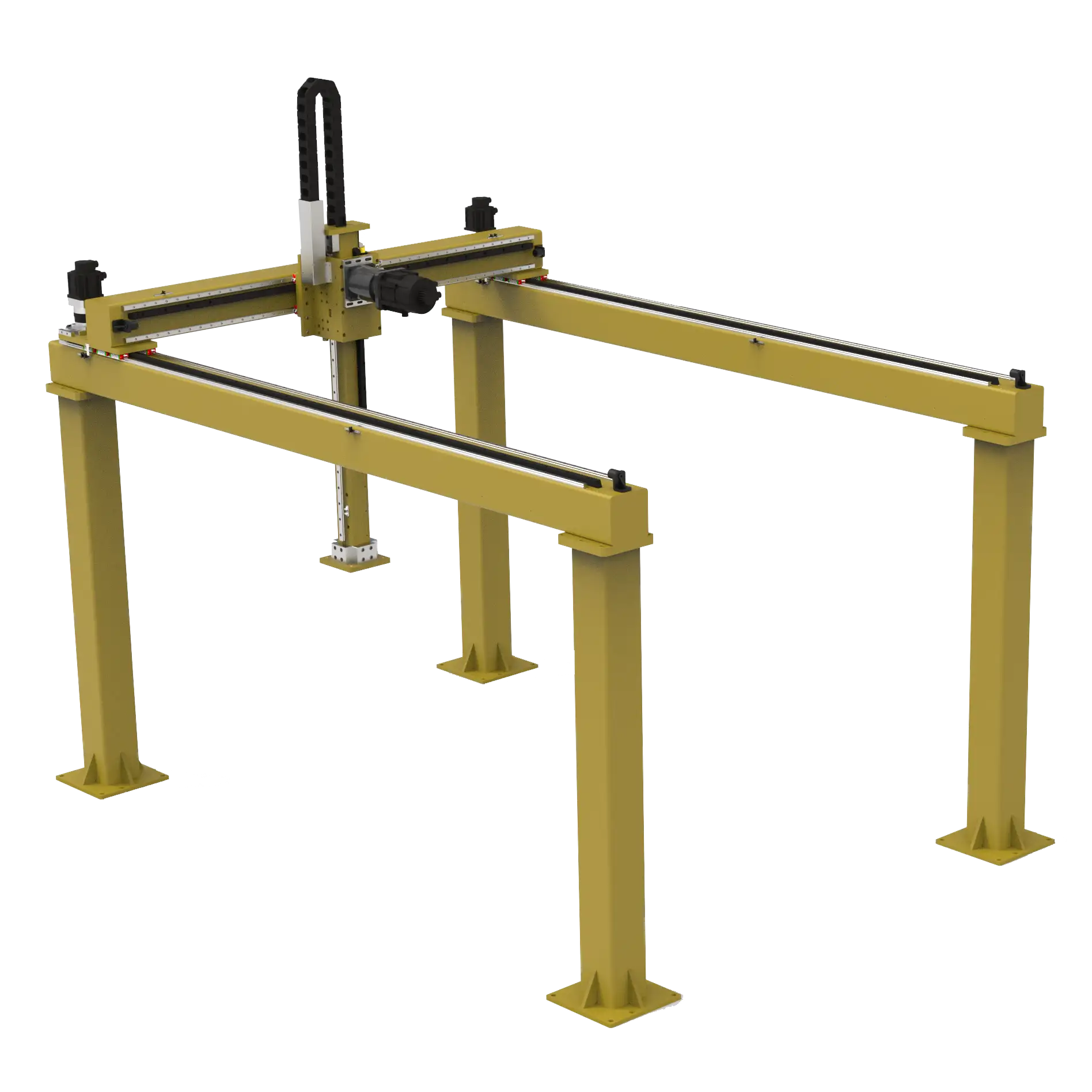
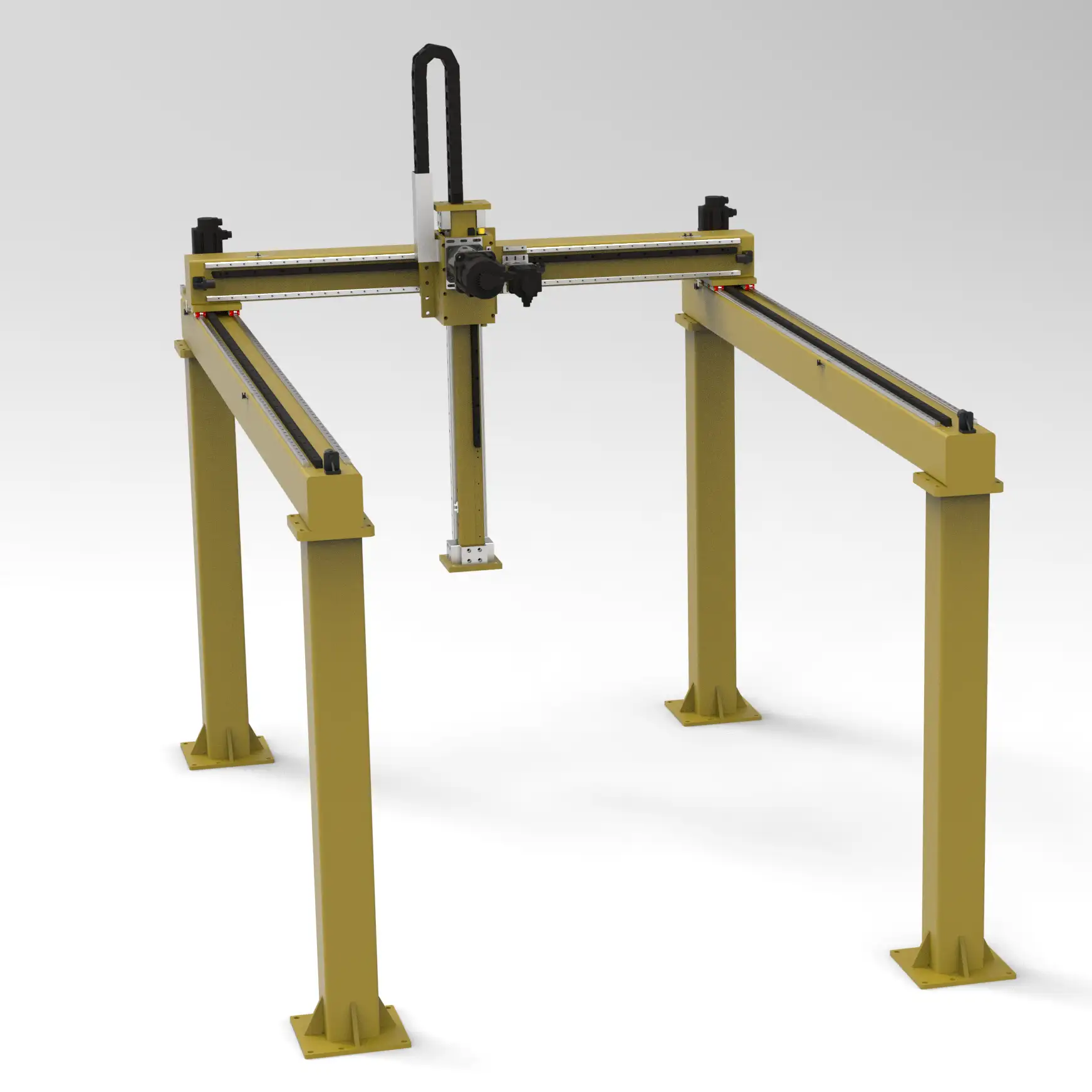
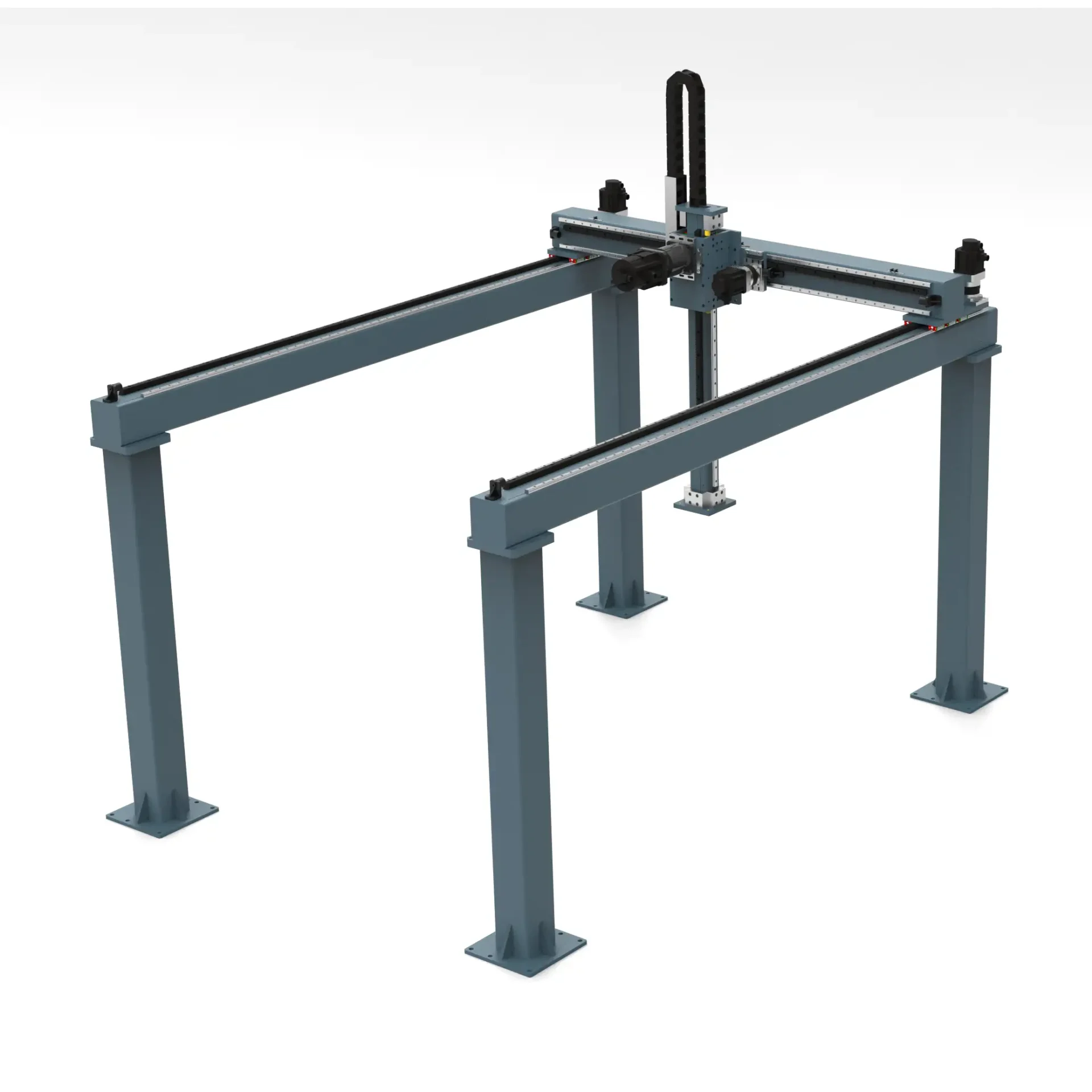
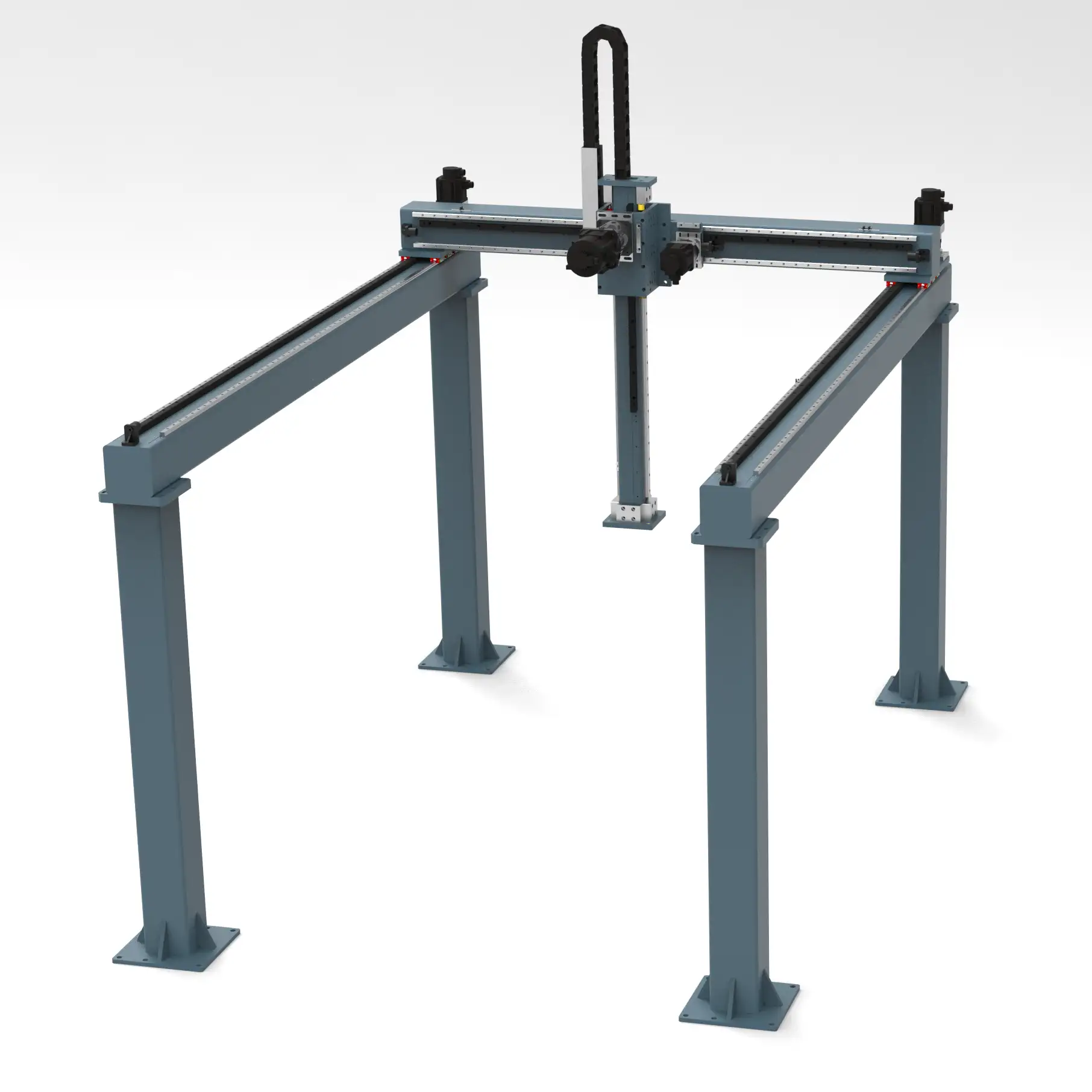

I. Structure
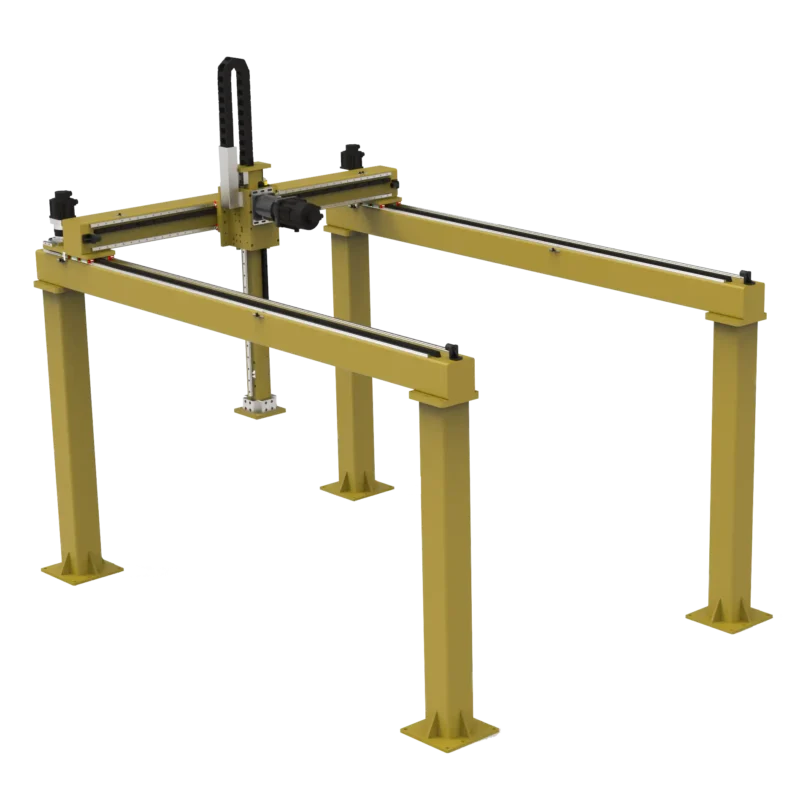
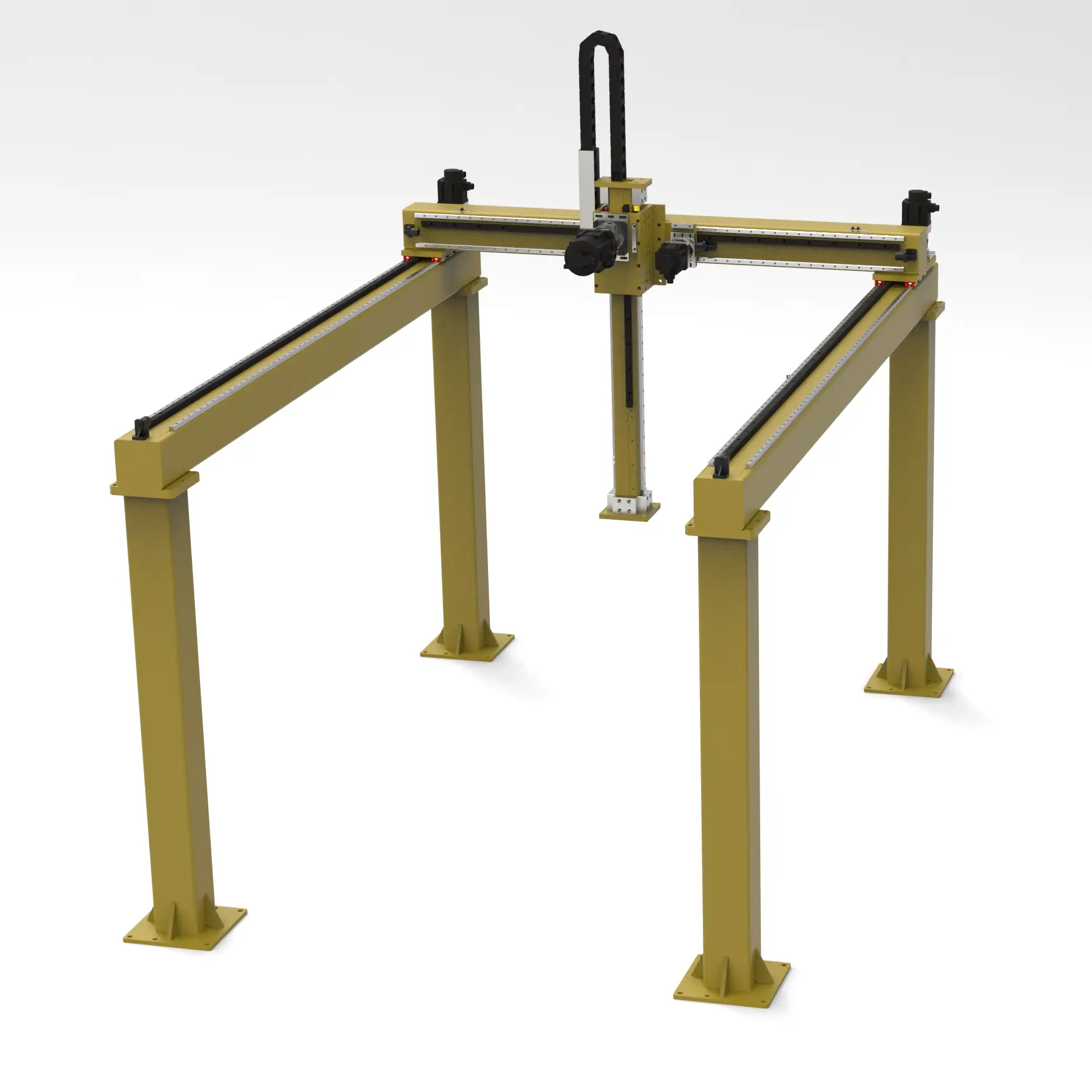
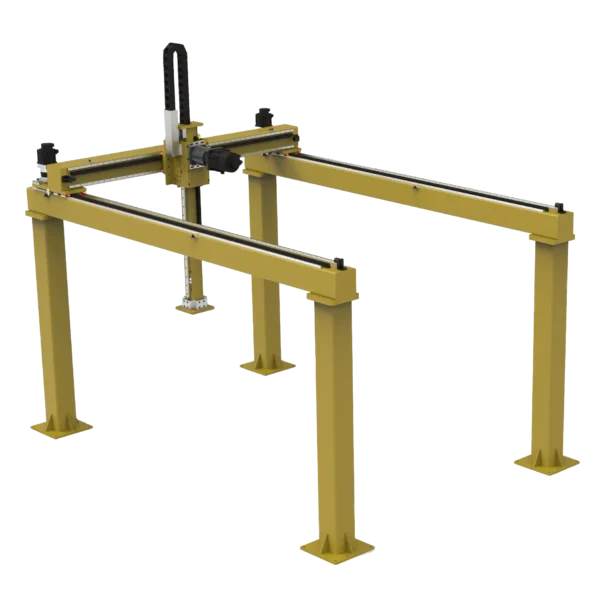
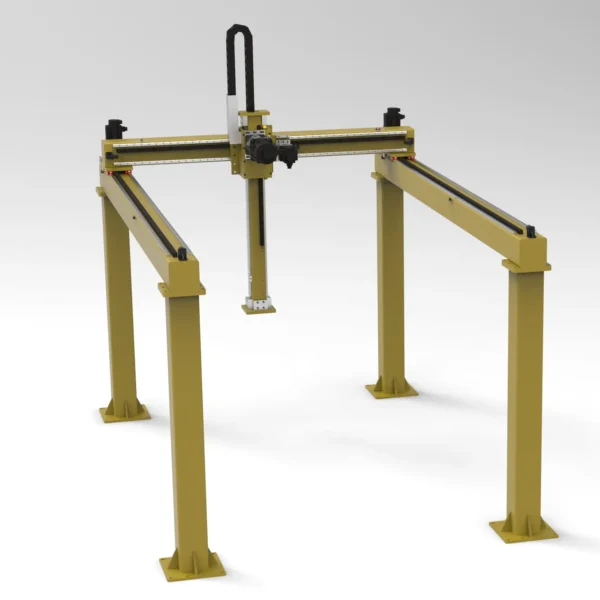
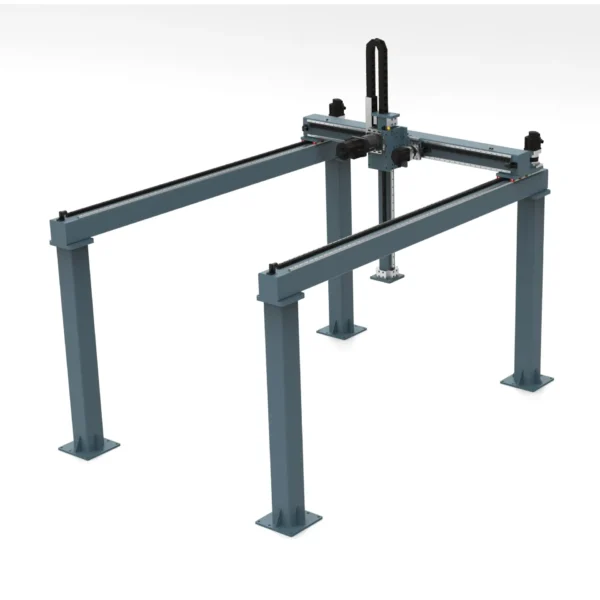
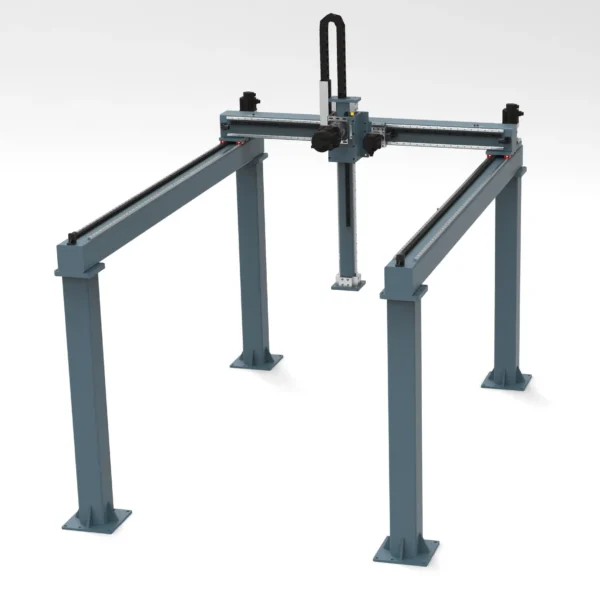
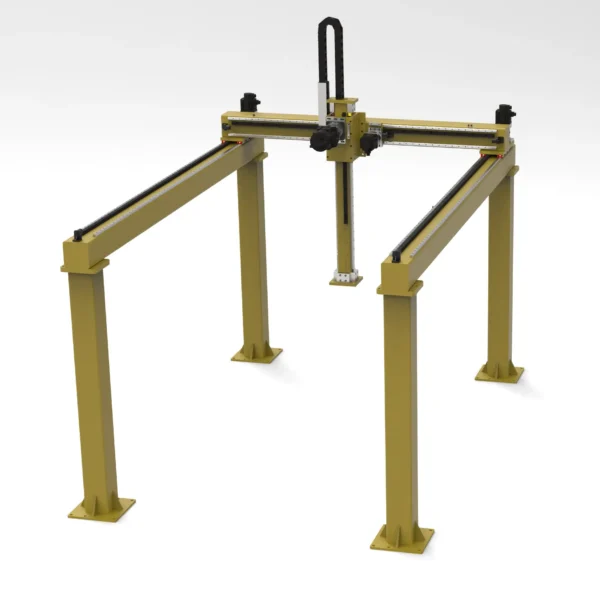
Gantry Frame: Two uprights + one (or more) crossbeams, resembling a “door frame,” welded from thick steel pipes/aluminum profiles, providing high rigidity and a large span (up to tens of meters).
Three-Axis Motion:
X-axis: Long-distance left and right movement along the crossbeam;
Y-axis: Forward and backward movement (perpendicular to the X-axis);
Z-axis: Vertical lifting and lowering, responsible for gripping/lowering.
Drive and Guiding: Servo motor + linear guide + gear rack/ball screw, ensuring stable movement and accurate positioning.
End Grippers: Grippers, vacuum suction cups, electromagnets, etc., replaceable according to workpiece shape.
Control System: PLC/industrial computer + servo driver, automatically running the path after programming.
II. Working Principle (How it Moves): Based on a Cartesian coordinate system, the XYZ axes are independently controlled and operate in conjunction; the controller sends commands, the servo motors drive each axis to move in a straight line, and the end effector is precisely positioned in three-dimensional space to complete the gripping > transport > placement cycle.
III. Core Features (Advantages):
High Load Capacity: Tens of kilograms to several tons, suitable for heavy workpieces. Long stroke: Span up to 100 meters+, covering multiple workstations/long production lines.
High precision: Repeat positioning accuracy ±0.05~±0.1mm, stable and durable.
Easy maintenance: Simple structure, decoupled motion, convenient maintenance, and low cost.
Highly customizable: Span, stroke, load, and speed can all be designed non-standard according to site requirements.
IV. Common Applications (Where are they used?) Automatic loading and unloading of machine tools (machining centers, lathes, grinding machines) Heavy-duty parts handling in automobiles/construction machinery Palletizing/depalletizing in warehouses, handling of sheet metal/pipes Large-size precision handling in electronics/photovoltaics.
V. Differences from multi-joint robots:
Gantry robots: Straight-line movement, cubic space, heavy-load long stroke, inexpensive
Multi-joint robots: Rotary joints, spherical space, flexible and compact, expensive, small load.