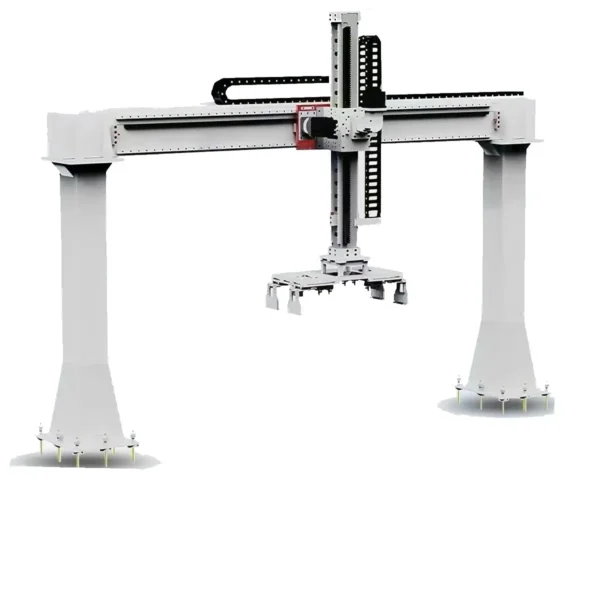

I. Core Structure
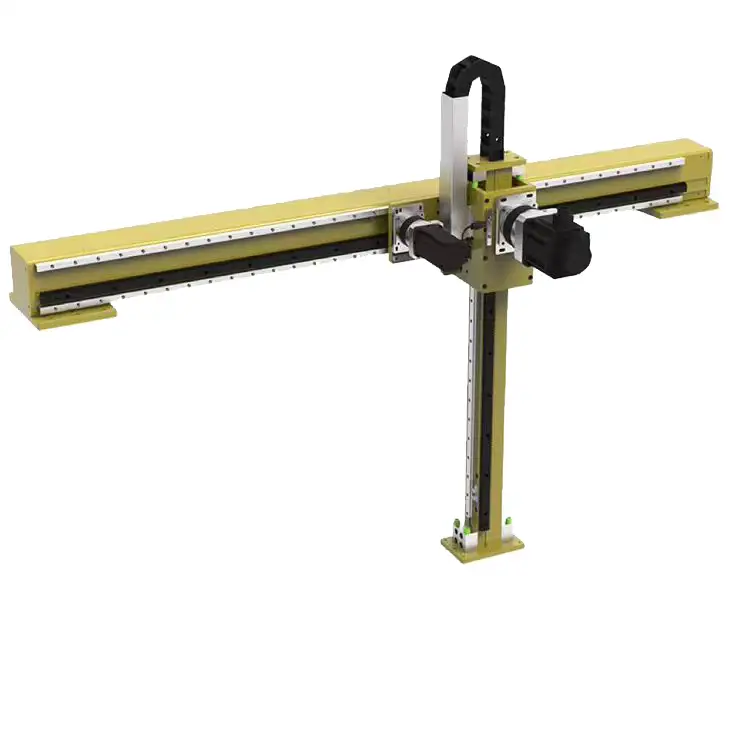
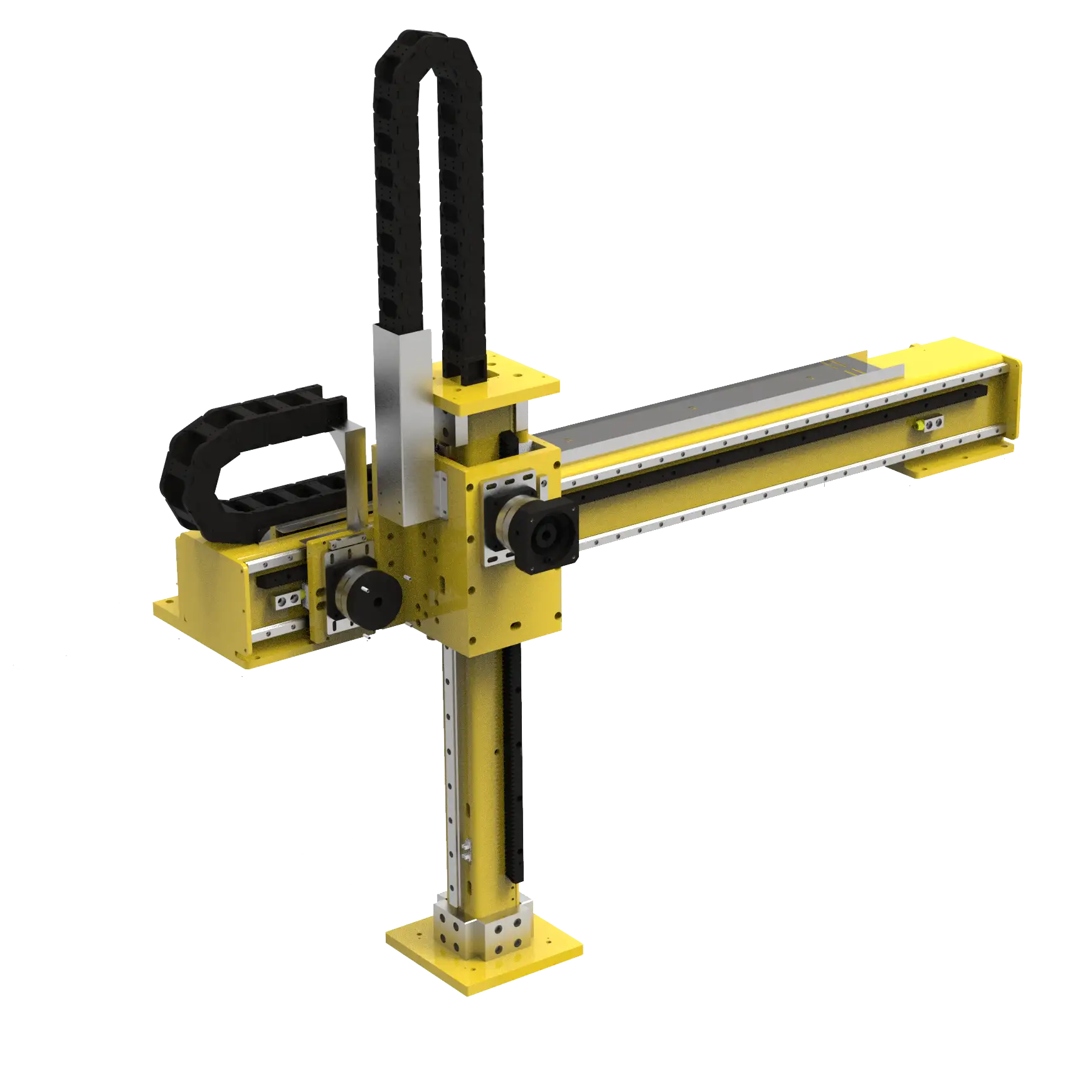
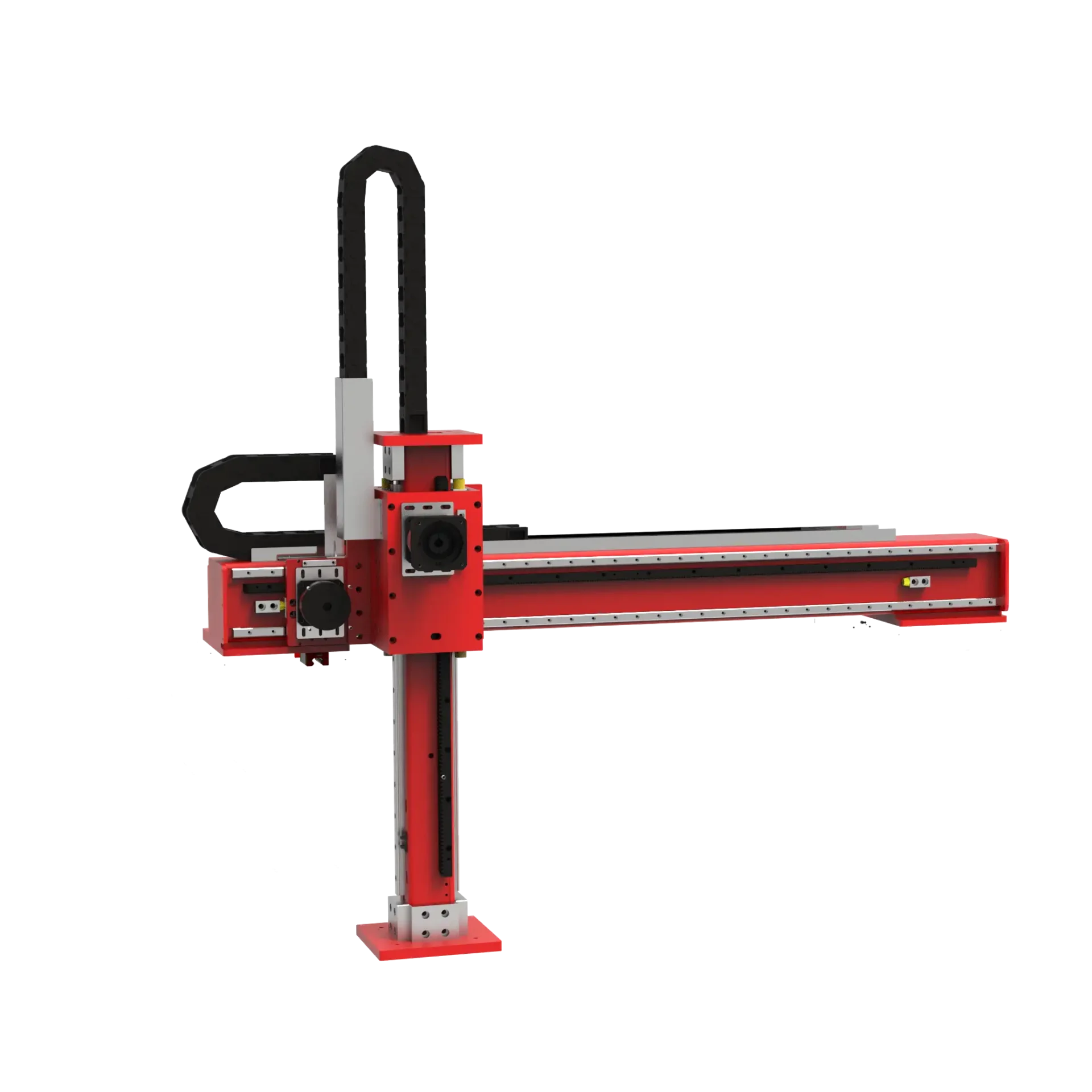
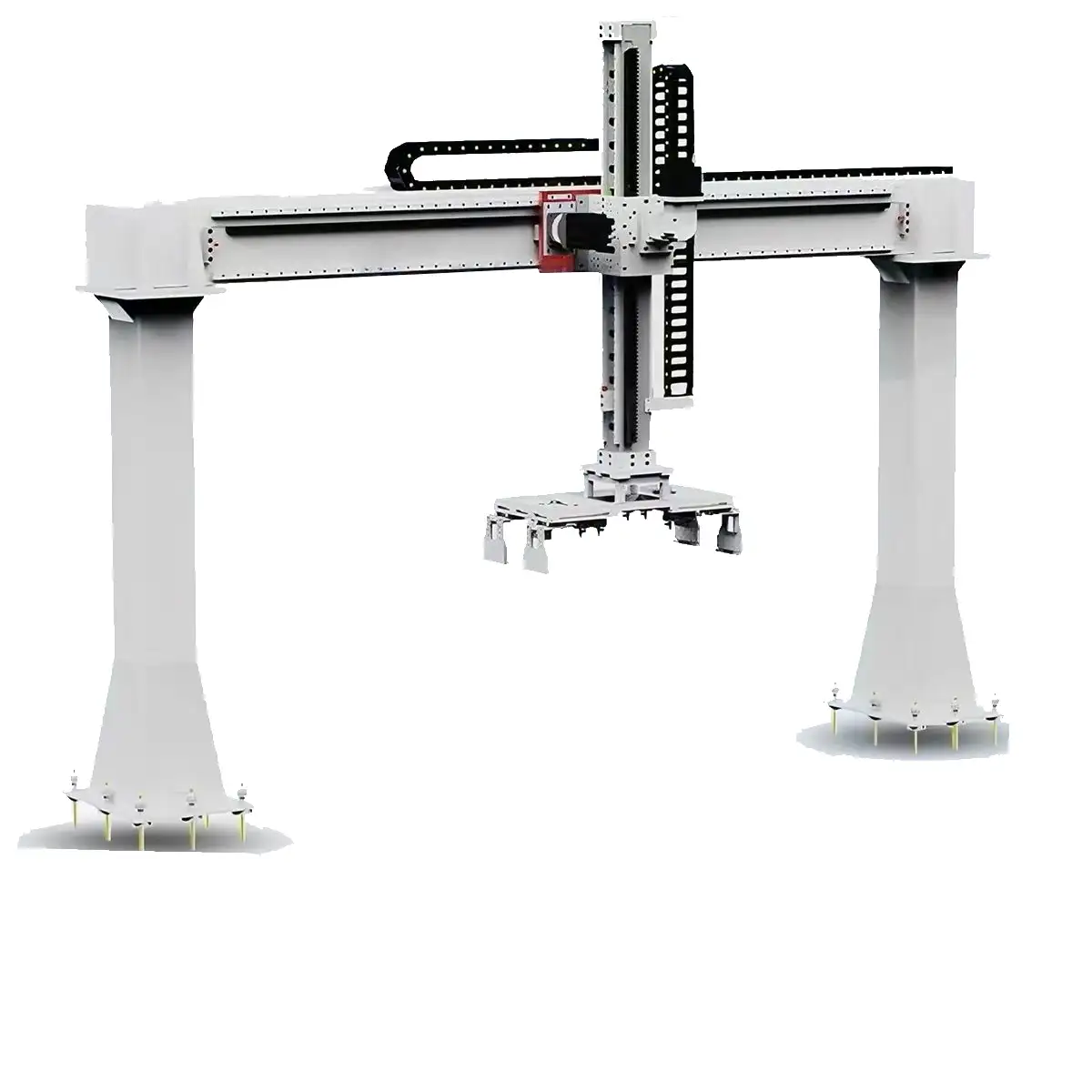
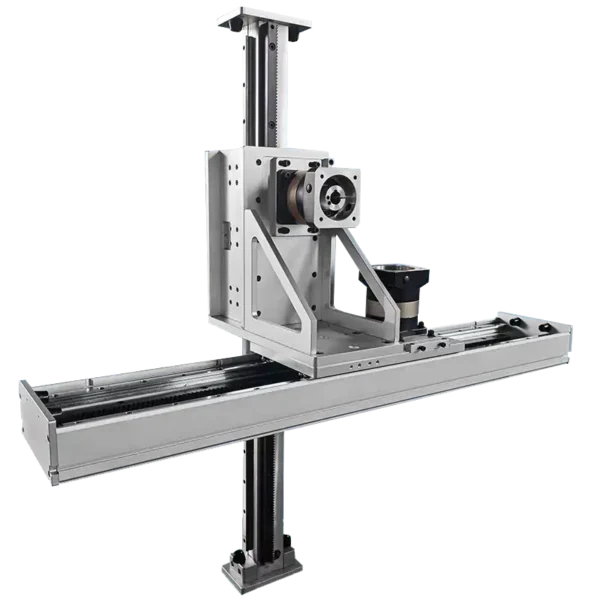
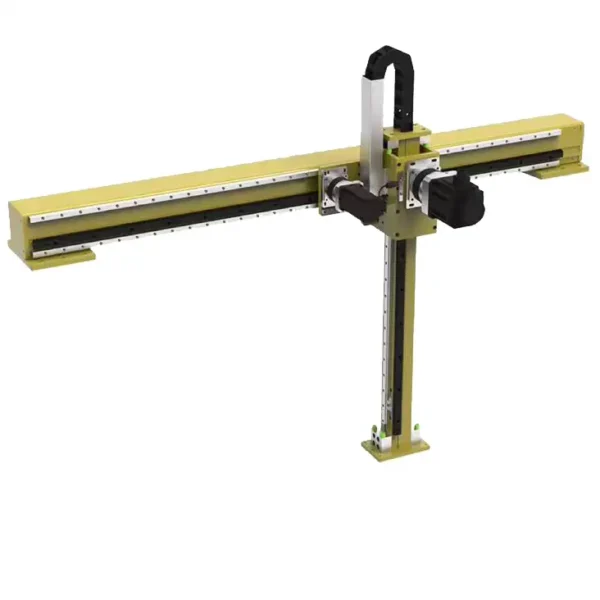
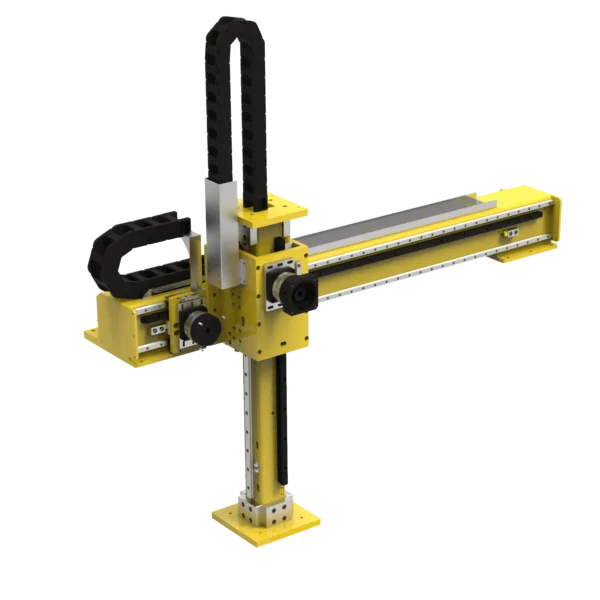
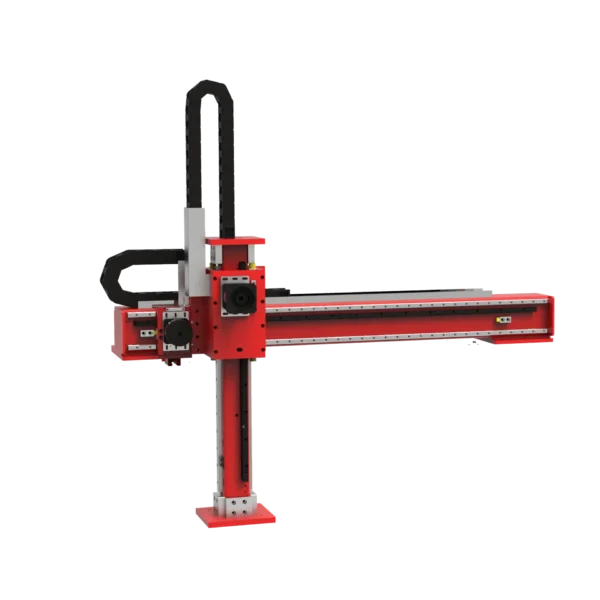
1. Truss Frame: Welded aluminum alloy/square tube frame, providing overall stability and supporting the various axis modules and loads.
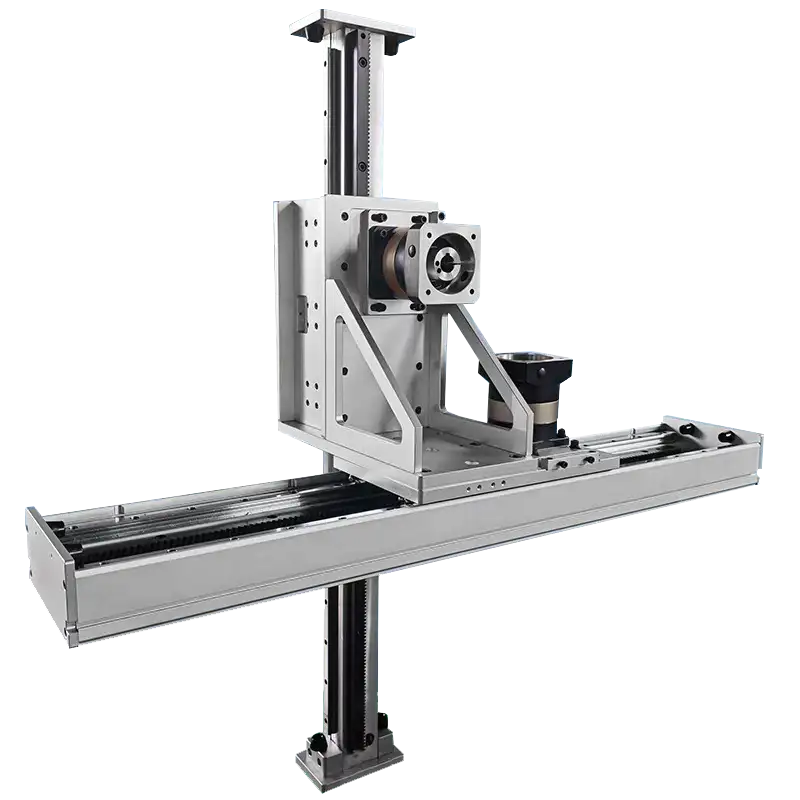
2. X-axis (Horizontal Axis): Equipped with a lead screw/rack and pinion slide, responsible for lateral movement, enabling transfer between workstations.
3. Z-axis (Lifting Axis): Vertically arranged transmission module, paired with end effectors such as grippers/vacuum cups, to complete material handling operations.
4. Drive Components: Stepper/servo motors + reducers, working in conjunction with the control system to precisely control speed and position.
5. End Effectors: Pneumatic grippers, vacuum suction cups, selected according to material shape, to grasp workpieces.
6. Control System: PLC/motion controller, programmable to set running trajectories and cyclic actions.
II. Working Principle
The control system issues commands, driving the X-axis module to perform horizontal displacement. After moving to the material handling position, the Z-axis descends to grasp the workpiece. Subsequently, the Z-axis rises, the X-axis moves to the target workstation, and the Z-axis descends to complete the material unloading, completing the automated loading, unloading, and transfer process in a cycle.
III. Product Features
Simple Structure: Dual-axis layout, convenient debugging and maintenance, low failure rate.
Precise Positioning: Equipped with a ball screw module, high repeatability, suitable for precision operations.
High Versatility: Small footprint, flexible installation, can be connected to machine tools, production lines, injection molding machines, etc.
Stable Operation: Smooth movement, low noise, can operate continuously for extended periods.
High Cost-Effectiveness: Lower cost compared to multi-axis models, making it the preferred choice for small to medium-sized automation upgrades.
IV. Application Scenarios
Automatic loading and unloading of machine tools, part removal from injection molding machines, 3C product transfer, small workpiece palletizing, material handling on production lines, automation upgrades of hardware processing stations, etc.